How Coffee Came to Chikmagalur: The Story Behind India's First Coffee Growing Region
The Malnad hills, long before coffee
Chikmagalur sits within a hill belt in Karnataka known as Malnad, which simply means land of hills. While some talukas in the district are dry plains, most of Chikmagalur lies within this belt of evergreen and deciduous forest. Long before coffee arrived, these hills were covered in tropical rainforest, with the valleys below acting as water catchment areas for the forest above. Early settlers lived in small pockets across the slopes, first as hunters and gatherers, later as paddy farmers wherever flat land allowed. This forest ecology is still what shapes farming and estate life in Chikmagalur today.
A saint, seven seeds, and a port called Mocha
Coffee's arrival in Chikmagalur is tied to a single shrine in these hills, Baba Budangiri, also known as Dattatreya Peetha, a site still shared by Hindu and Muslim worshippers. According to local legend, a saint named Baba Budan carried seven coffee seeds hidden in his robe from Yemen. At the time, nearly all coffee in the world moved through one port, Mocha, which is where the word mocha actually comes from. It refers to a trading port, not chocolate. From Mocha, the seeds are said to have travelled by dhow to Mangalore, and from there into the Chikmagalur hills.
There is no historical record confirming this exact journey. It survives as a legend passed down through generations and repeated in guidebooks rather than documented fact. What is not in question is that Chikmagalur became one of the earliest places where coffee took root outside the Arab controlled ports, and that it grew well on these dwarf slopes long before coffee spread anywhere else in India.
The British era and the clearing of the forest
What happened after is easier to trace with historical record. Early coffee growing stayed small scale until the British began clearing land at scale in Chikmagalur. One story from the estates says the British got local labour to clear dense forest by scattering silver coins through the undergrowth, telling workers that whatever coin they found while clearing was theirs to keep. Whether or not that detail is exact, the outcome is documented: the forest came down across large parts of the Malnad hills, and coffee took its place.
Planters, timber traders, and railway workers
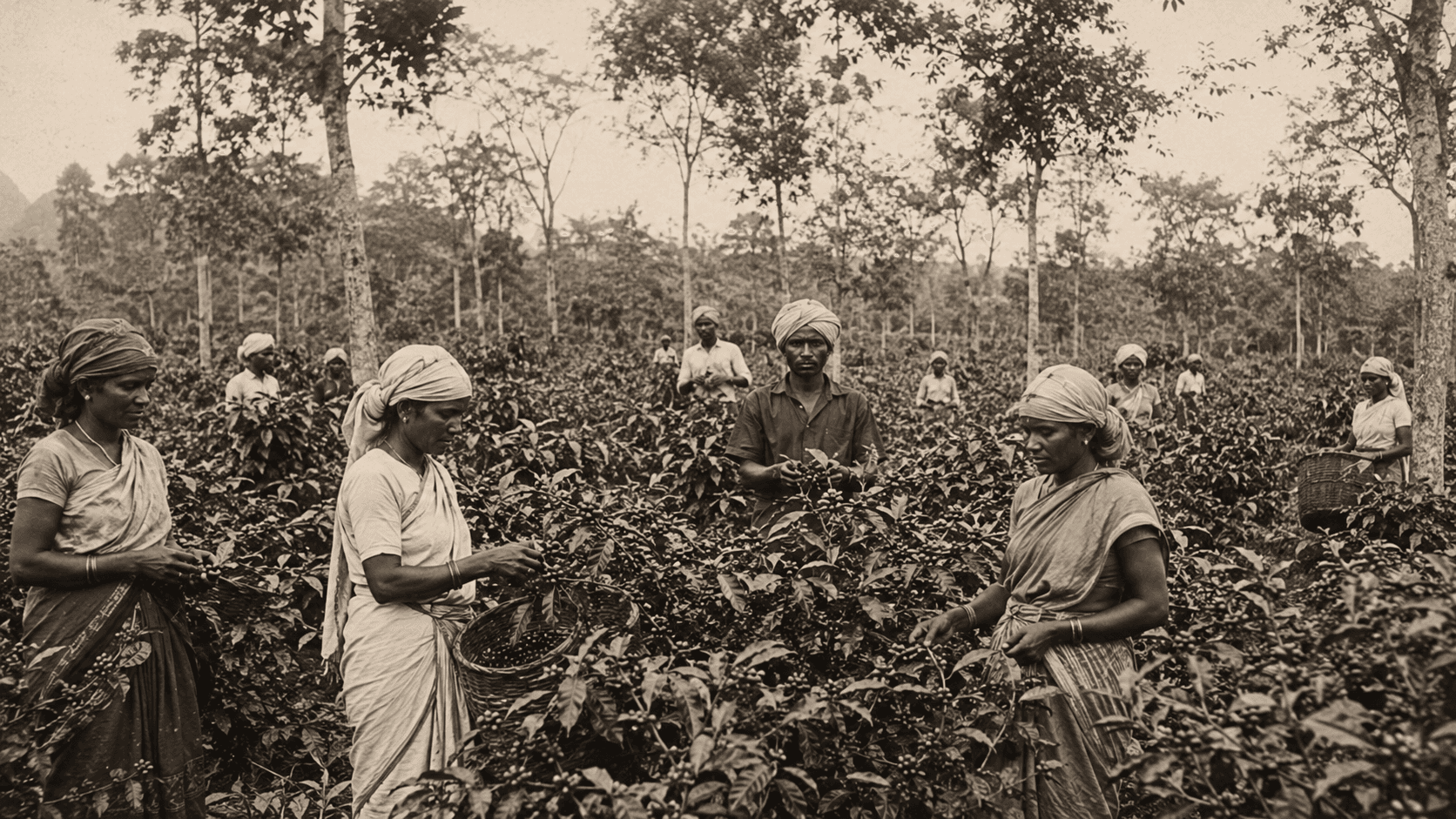
Coffee growing in Chikmagalur was never the project of a single community. Locals from the district worked the land alongside migrants from South Kanara and Tamil Nadu, many of whom arrived as railway work brought them into the region. Families from Kerala came too, though not for coffee at first. They arrived as timber merchants, cutting and trading wood, and only later moved into coffee planting themselves. Mangalore became the regional hub where coffee was cured and shipped onward, and it is still home to some of the oldest coffee curing works in the area.
This mix, planters, timber traders, railway workers, and migrants from three different states, is what actually built the coffee landscape visible in Chikmagalur today. It came together slowly, shaped by forest clearing, trade routes, and people moving for work, long before Chikmagalur was known as a coffee destination.
Woodway Estate, standing on the same ground
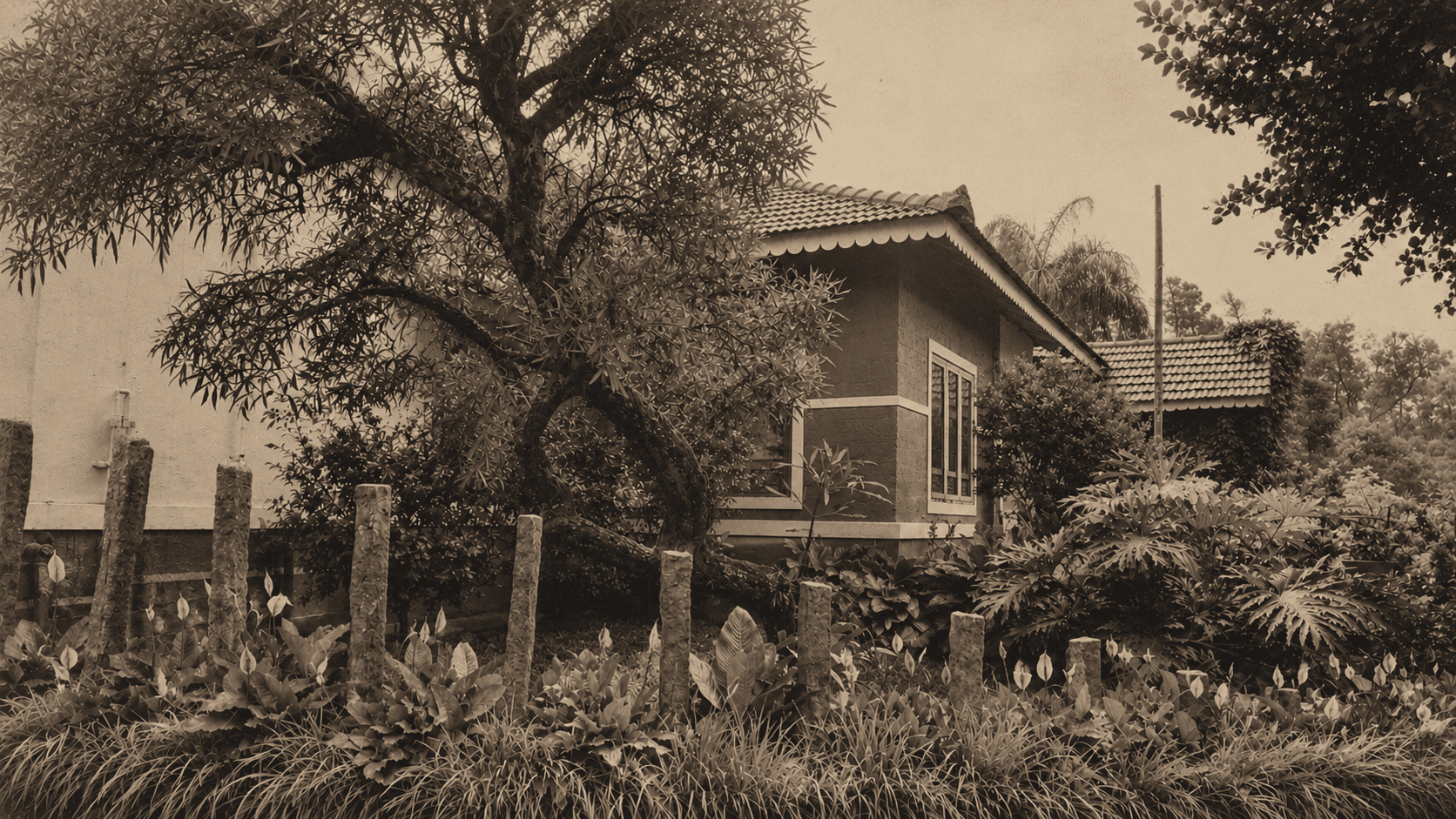
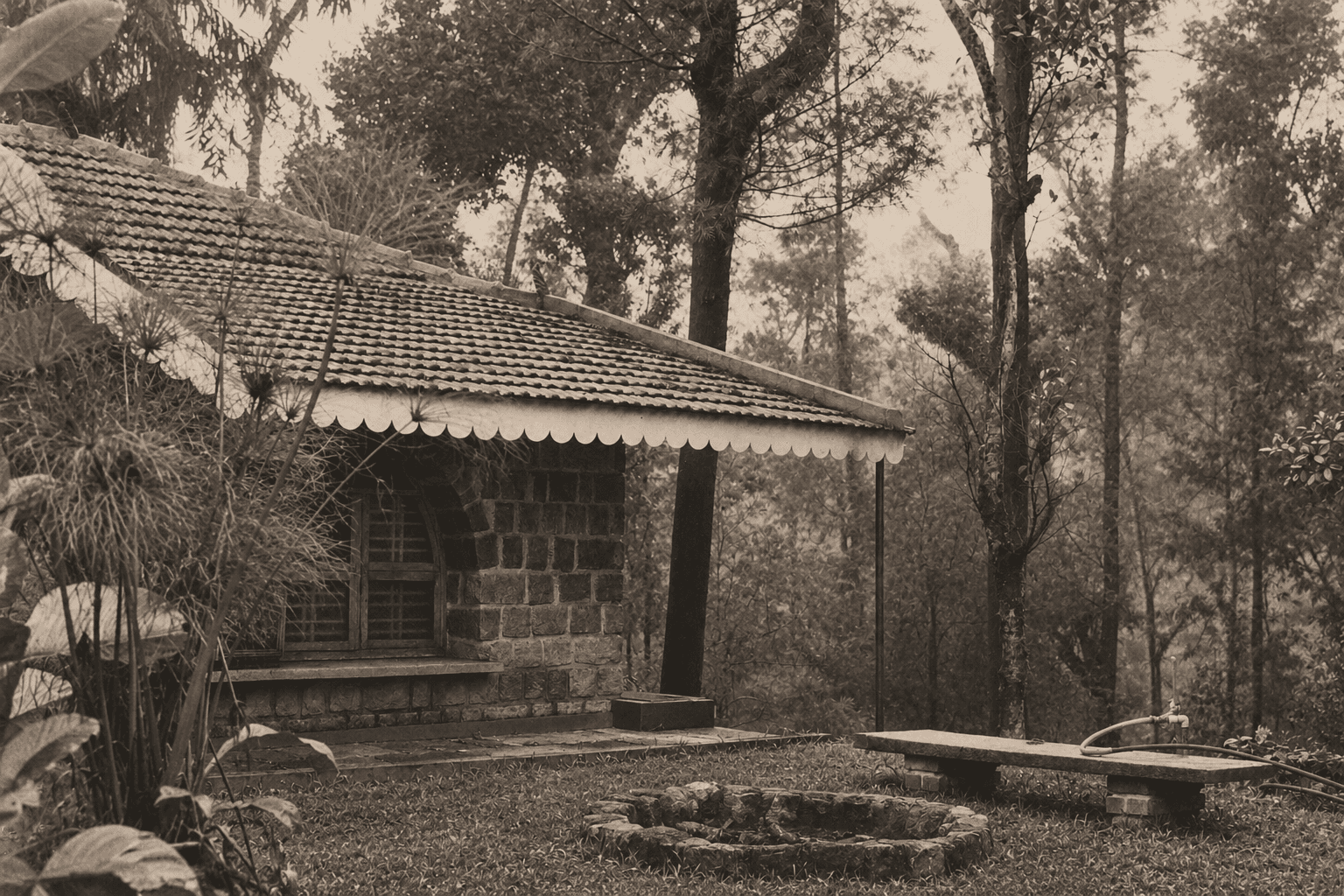
Woodway Estate sits on this same ground. The slopes around the estate were part of the same forest, cleared in the same era, planted by the same mix of hands described above. Walking the estate today, the shade trees, the terrain, and even the pace of the mornings carry traces of that older story, a saint's seeds, a trading port across the sea, and generations of people who turned rainforest into what is now one of India's most recognised coffee regions.
Story Narrated by- S.Girija Shankar
Written by - Bhavana